Most people never have to think about vanishing. For survivors of stalking or domestic abuse, it isn’t abstract. It’s a plan they’ve already carried out, often at real cost: leaving a job, a home, a name, a whole network of people who knew them. The plan rests on one assumption. If you move carefully enough, the person you’re running from can’t find where you landed. Face search is turning that assumption into a gamble.
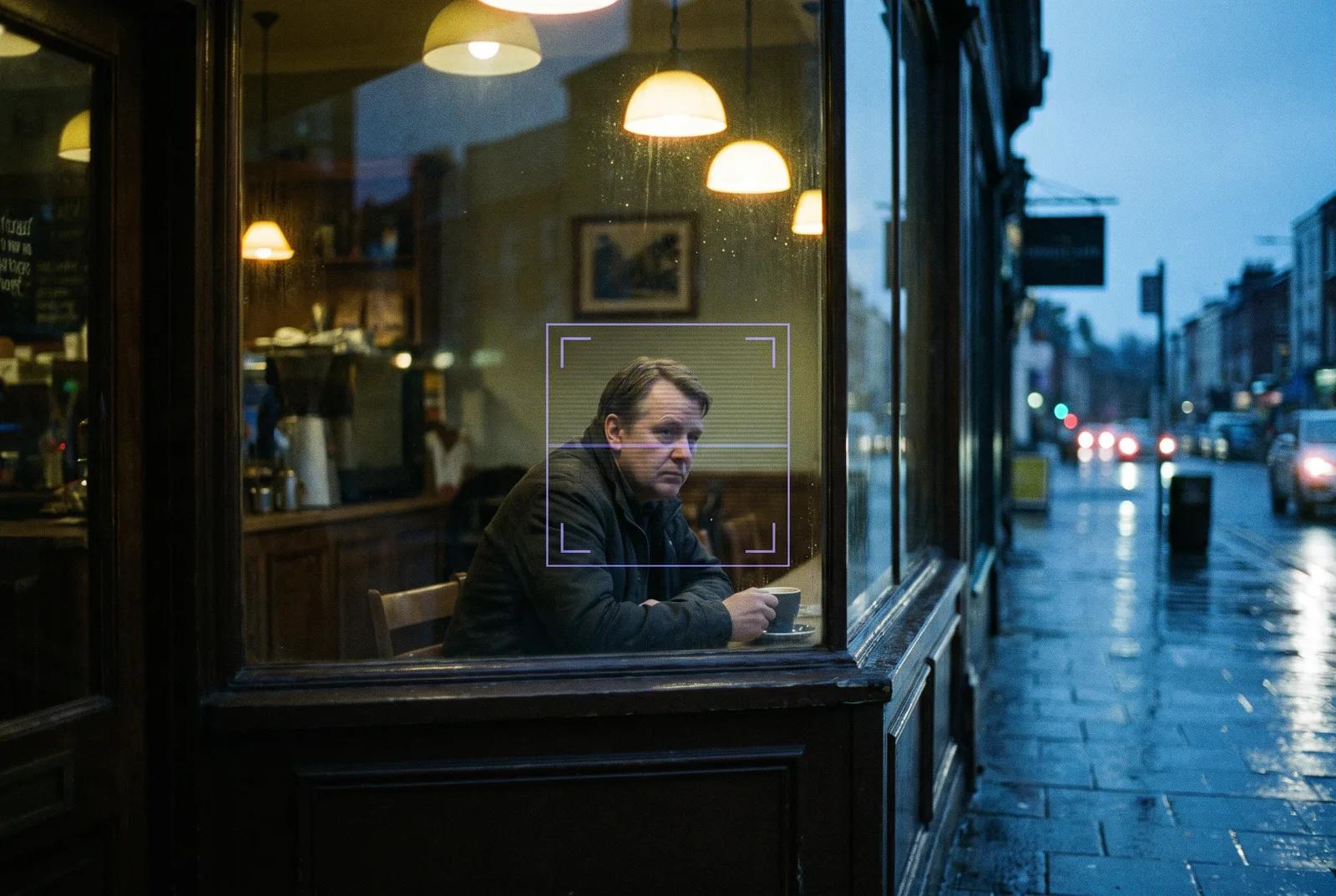
Disappearing used to be possible
The playbook for starting over was built around text: your name, your number, your address, and the records that tie them together. You relocate. You change what you can. You file the confidentiality paperwork your state allows, and you pay a service to pull your details off the data brokers. Done well, it worked, because to find you, someone had to already know a piece of the text and search forward from it. If all they had was a memory of your face, they hit a wall.
That wall was the whole point. It’s the thing face search removed, and it removed it without asking anyone.
Face search runs the attack backwards
Every traditional protection assumes the search goes identity first: someone types a name and tries to find the person behind it. Face search flips the direction. It goes face first, person second. Someone starts with a photo and works out who you are. An engine like PimEyes or FaceCheck.ID compares that photo against a huge index scraped from the open web and returns the older pictures that match, the ones carrying your former name, your old city, the tags from a life you left.
You can change your name and never post again, and it doesn’t help, because you didn’t upload the images that give you away. Other people did, years ago, and the engine indexed them long before you ever thought about leaving. Your new face is the key that reopens the old file.
One candid undoes the work
This is what makes it so hard to defend against. You don’t have to slip up. A stranger’s photo with you somewhere in the background. A friendly new coworker who tags a team lunch. A gym’s promotional post you happened to walk through. Any one of those puts a current image of your face somewhere a searcher can reach it, and reaching it is enough. A person who has spent years looking for you doesn’t need you to make a mistake. They need one clear frame, and the internet produces those constantly, most of them uploaded by people who mean you no harm at all.
Why scrubbing data brokers isn’t enough
Data-broker removal services do real, important work. They block the “type a name, get an address” attack, and for a lot of people that’s most of the exposure. But they operate on text, and they can’t touch the face layer. If your faceprint is still in the reverse-search engines, a searcher skips the name entirely: face first, name second, address third. Removing your info from brokers without removing your face from the engines leaves the front door of the attack standing open.
The two protections aren’t interchangeable. One guards the text. The other guards the face. If your threat model is a specific person actively looking for you, the face is the layer that fails first, and it’s usually the layer nobody thought to check.
What actually helps
You can’t control every photo you appear in, but you can control whether your face is searchable. That’s the job FacePrivacy does. We file opt-out and removal requests with the major facial-recognition engines, PimEyes, FaceCheck.ID, Precheck.ai, Lenso.ai and the rest, log the confirmations, and re-file when a new scrape puts you back. When your faceprint isn’t in the index, a candid photo of you resolves to nothing. The key stops fitting the old file.
It won’t erase the past, and for a threat this serious it should sit alongside the other steps: a confidentiality program, broker removal, and the guidance of a domestic-violence advocate who does this every day. But of all the layers, the face is the one most people don’t know is exposed, and it’s the one quietly undoing the rest.
If you’re in immediate danger, contact local emergency services. In the U.S., the National Domestic Violence Hotline is available 24/7 at 1-800-799-7233, and can help with safety planning, including address confidentiality programs.
Keep your face out of the search that finds you.
FacePrivacy removes your faceprint from the major face-search engines and keeps it removed, so a photo of you today can’t reconnect to the life you left behind.
Protect your face →